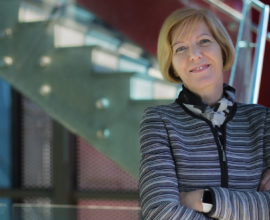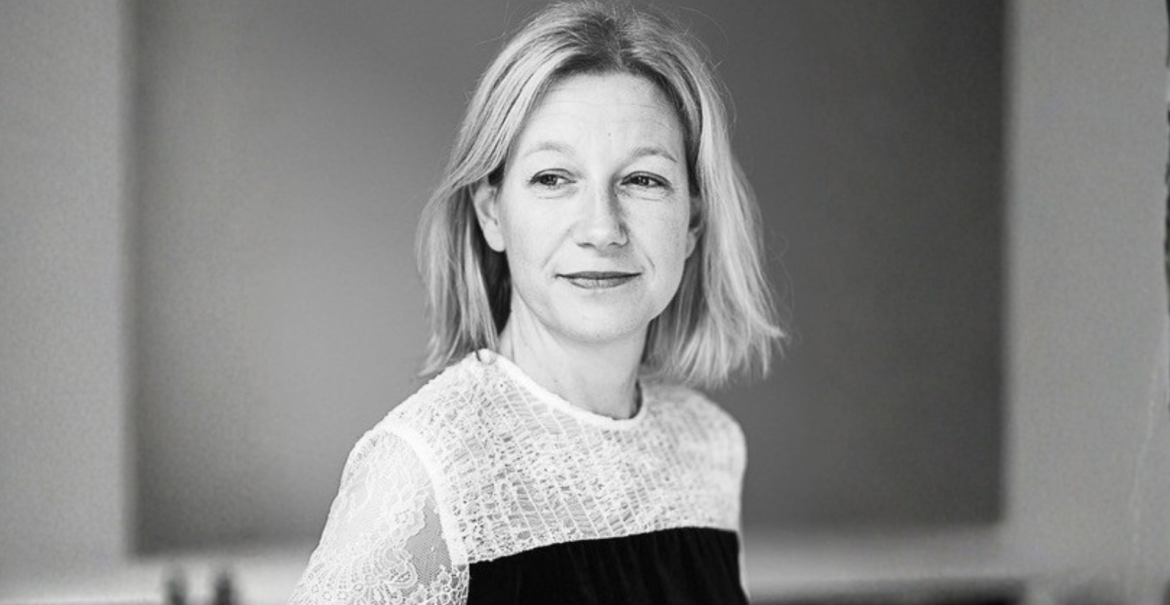
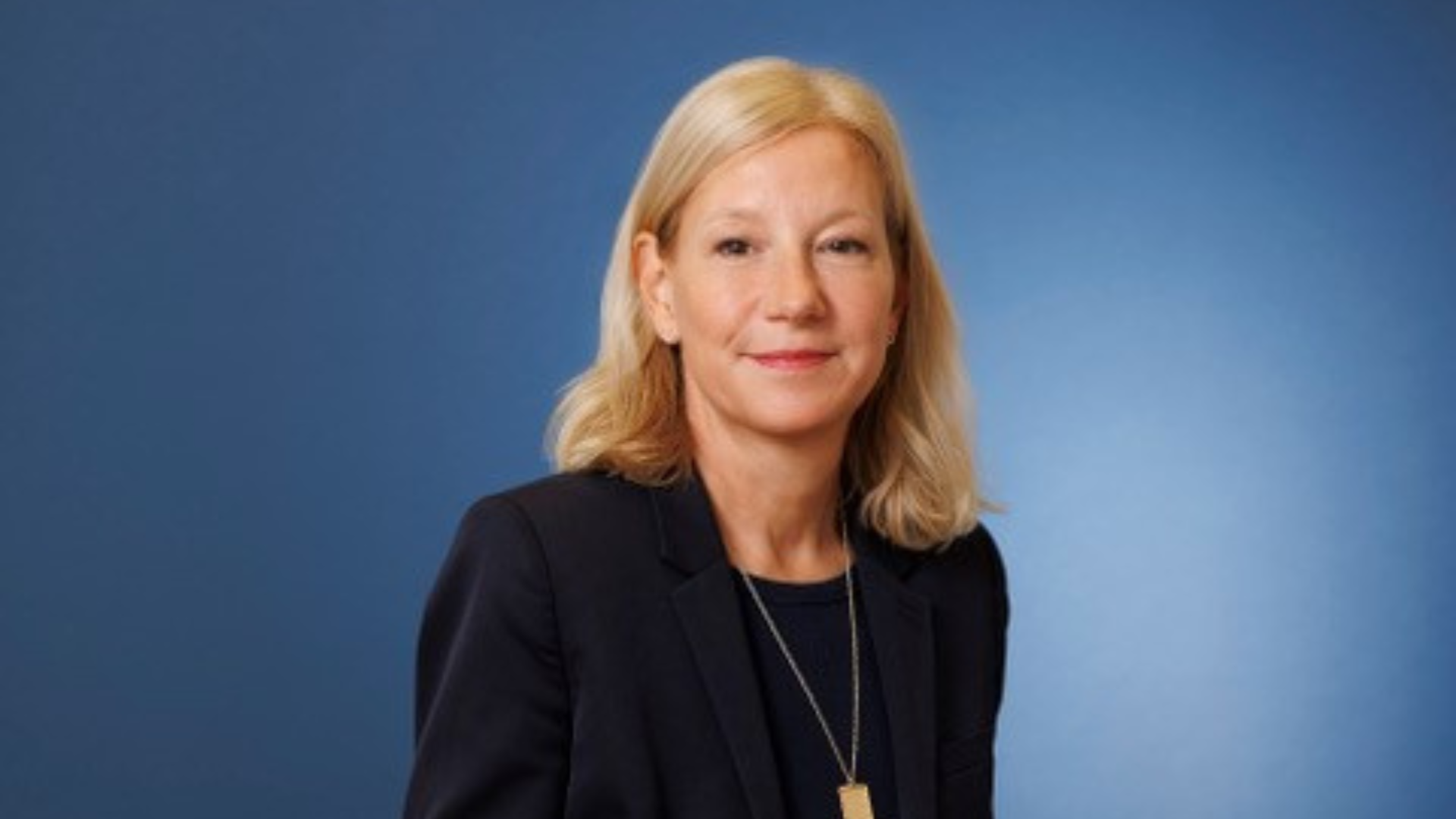
Valérie Le Chevillier – Le Goff
A communicator for the eye of a crisis
 Reading Time: 8 minutes
Head of Group Communications, Lactalis
“The more problematic, volatile and complex a situation is, the better the fit for me. Crisis communication calls for a great deal of creativity. Tailor-made strategies must be designed by scrutinising the ecosystem and anticipating all the opposing arguments,” says Valérie Le Chevillier, sharing what appeals most as regards her profession: the steering of sensitive situations.
A SciencesCom graduate back in 1996, Valérie went on to spend 25 years working for communications firms (Ketchum, Edelman, and Publicis), deemed a veritable training ground in exigency according to her testimony. Since 2021, she has been head of communications at Lactalis, the dairy industry’s global leader and the leading player in the French agribusiness industry. A meeting with this behind-the-scenes expert who is now at the communications helm of a flagship company that boasts a staff of 85,500 employees.
Your academic journey begins with your studying Modern Literature at the Catholic University of Angers. Where does your love of literature originally stem from?
My love for reading began at a very early age. Early doors, I read the entire works of Émile Zola. The thing I find fascinating is the social saga aspect. I really enjoy the storyline, and the novel offers a unique sociological dimension, giving you the impression of living in the heart of an era. I was also very keen on Latin. I followed my passion by choosing literary studies; however, this was also because I didn’t know which profession to move into. I hesitated with law, but literature was more aligned to what makes my heart soar. My profile is somewhat unconventional in my close circle: I grew up in a family environment that was rather scientific, so I am the only one in my family with a literary background!
And yet, you aren’t drawn to the teaching profession. How did the idea of moving into the media world and attending SciencesCom in 1995 originally come about?
You’re right, I couldn’t see myself in a teaching role. The idea of becoming a journalist gradually started to gain ground. After my master’s degree in Rennes, I got onto the SciencesCom programme, in Nantes. Having a good many seasoned professionals as part of the school’s academic curriculum was all very new to me, especially after the highly theoretical teaching methods I experienced at the faculty. Looking back, this was the best year of my entire study path. SciencesCom put an impressive range of facilities at our disposal, including an entire television studio. We had real-world modules: we arrived early in the morning to prepare the news reports, all within a strictly professional framework. What’s more, our small class year of under 30 students was very close-knit, with members hailing from a diverse range of backgrounds. I have kept close ties with a certain number of them. Incidentally, my second son’s godmother is a friend I made whilst studying at the school.
This was equally a time of tremendous technological transition, during an age when the Internet was still in its infancy…
Absolutely! Internet wasn’t part of our day-to-day life; I initially came across it at SciencesCom. I recall helping to organise a business festival in Biarritz. I covered a conference whose theme brings a smile now: “Will the Internet topple the Minitel? The experts’ conclusion was unanimous: no, the Minitel would have nothing to fear from the Internet… This was very forward-thinking! It was also during my year in Nantes that I discovered the communications world. It was a field I knew nothing about but one that immediately sparked my curiosity.
Yet, your entry into the world of work almost began by a sliding doors moment. In what way did this unforeseen event help in launching your career?
At the end of my year at SciencesCom, I had to go on a six-month internship. I’d applied to an events agency in Paris. The internship was validated, my accommodation had been found, etc. Yet, the day before I took up my post, the company pulled out. I found myself left in the lurch, in full panic mode. As a matter of urgency, I called up SciencesCom and had a stroke of luck: an offer had just come in at the school: the American agency Ketchum was setting up offices in France and looking for an intern. I did the interview and was selected. The events agency letting me down at the eleventh hour actually turned out to be the chance of a lifetime. At the end of this internship, Ketchum offered me a fixed-term contract for three months, and then a permanent employment contract. All this took place in the mid-1990s, during a harsh economic climate for young graduates.
What appealed to you in this world of communication agencies, where you would end up spending 25 years?
The agency is a very unique ecosystem. What won me over, was being surrounded by people all doing the same job, with whom you share the same codes of practice. And your everyday is a source of incredible intellectual wealth: you get to cover a wide range of sectors. Initially, I worked for the International Flower Bulb Centre. This may seem like a small thing, yet this represents a huge market based in the Netherlands. They gave us carte blanche with some pretty substantial budgets. We put forward bold concepts, such as decorating fashion shows with floral scenes to generate more media coverage. In parallel to this, I would also be managing budgets for a chemist’s or an air carrier. I find this diversity inspiring; on any given day, you jump from one world into the next.
It’s also during your time at Ketchum that you first encountered what would go on to become your area of expertise: crisis communication.
The lightbulb moment came when two American clients of ours were going through major crises. In the late 1990s, in France, crisis communication was in its infancy. The concept of a spin doctor wasn’t really a thing, whereas in Anglo-Saxon countries this was already a field of recognised strategic expertise. Ketchum brought over a specialist from his London office and I was appointed to work alongside him. This was a real revelation. It turned out to be something I loved. The more problematic, volatile, and complex a situation is, the better the fit for me. We assume crisis management to be a mechanical process, yet this is a falsehood: it calls for a great deal of creativity. Tailor-made strategies must be designed by scrutinising the ecosystem and anticipating all the opposing arguments. Here, I have found the perfect blend of two professions that appealed to me in my younger years: the journalist role for the investigative side and media relations, and lawyer for defence and discursive strategy.
Then you leave Ketchum to join other major agencies, in particular Edelman and then Publicis, thus consolidating this expertise.
I spent four years at Ketchum prior to being contacted by Edelman, where I would then remain for seven years. I handled many complex cases in the agri-food and health industries for them, in fascinating sectors affecting consumer safety. As soon as a crisis broke out, I was there. I also accompanied major international sports races during critical accidents or doping issues. Later on, my boss at Edelman was called upon by the Publicis group to found the MSL agency in France, focussing on key international accounts, and I followed him. This was a tremendous time; we had the feeling we were building a startup whilst also benefitting from the backing of a large powerful group. MSL supported many pharmaceutical laboratories and agri-food giants. By amassing experience in these fields, I was increasingly identified as a crisis communicator. I then joined Publicis Consultants, the group’s corporate agency which had a very powerful crisis centre.
What’s your take on this world of communication agencies, and what advice would you offer to young professionals just starting out?
I always advise my work-study students and interns to spend some time at an agency. It is an incredibly efficient training ground, that is very demanding, that teaches you teamwork and also fosters a sense of service. It is very fast paced, and you push through with big adrenaline hits. In crisis communication, in the same hour you may go from the judicial strategy of a laboratory to an historic trial involving the management of a suspected bedbug infection at a cinema, or lead an online meeting with gynaecologists on toxic shock syndrome related to tampon use. Moreover, the relational aspect is fundamental: in a crisis situation, the business leader is subject to immense stress. Finding themselves face-to-face with a person of trust who is able to keep a cool head creates a special bond.
Following ten years at Publicis, you decide to make the leap by joining Lactalis appointed to the position of Group Communications Director. What drove your decision to work for a time with this marketer?
The challenge they were proposing was so incredible that I couldn’t turn it down. The company was coming out of a significant infant-related media crisis. Historically, Lactalis chose to exercise a culture of discretion. There was little communication from the group under its name. Communication was put out through its very popular commercial brands that are household names, (Président, La Laitière, Roquefort Société, Lactel, etc). While the brands were in command of their marketing, the group did not have a corporate communications culture. Faced with this crisis, the Lactalis company came under attack and found itself at a loss. The managing board realised that it had become vital for them to build a robust corporate communication. I was unfamiliar with the inner workings of the firm, but the profile they sought was in perfect alignment with my own career path: proficiency in complex crisis management and across the agri-food and pharmaceutical sectors. My knowledge as regards food safety tipped the scales in my favour. For my part, I was exceedingly motivated by this exciting industrial sector, and being a real foodie myself, the world’s leading dairy group couldn’t be more appealing!
So, the transition from the agency world to a multinational didn’t prove too unnerving for you?
Well yes, culture shock is real. In an agency, when you’re not sure of something, you just need to stick your head in the office next to you and call on a peer for advice. In a company, it’s lonely being a communicator: your colleagues have different rationales, be they financial, industrial, or logistic, for instance. You find yourself on the front-line of one’s expertise. When I took up my post in 2021, in-house communication was already highly robust. However, it was necessary to structure the institutional voice and give the group with a corporate face.
Today, Lactalis is an industry giant. Could you walk us through some of the figures so we can grasp the sheer scale of this group?
It is a huge flagship of French industry, the world’s leading dairy group and France’s leading agri-food company. In 2025, our turnover hit 31.2 billion euros. On an industrial level, we are present in 50 countries and have 260 production sites. Our products are sold in over 150 countries and the Lactalis community boasts a staff of 85,500 employees. It is an incredibly powerful machine, that has remained rooted in its territories: the global headquarters are located in Laval, in Mayenne, which is where I am based. Personally, I live in Rennes, which allows me to retain a strong foothold in the Great West region of France. Yet, business trips are part of my job which enables me to better understand the various cultures and how important the local context is in the way we approach communication.
How do you manage to balance this intensive day-to-day work life with your own private and family life?
It’s all a question of organisation, as well as loving your craft. I am fortunate to be married to someone who has a less demanding profession than mine. We have two boys. When they were younger, managing our daily routine required us having excellent logistics! And yet we’ve always managed to strike the right balance. My children grew up with working parents both heavily invested in their professional lives, and I believe this has also given them a good work ethic and a true sense of commitment. Although my job is time consuming, I have always made sure to take time to enjoy precious family moments. If I had to do it all over again, I’d sign up for the exact same life path, without changing a single thing!